Hydrogenase For Self Sufficient Hydrogen Powered Aircraft
2030: Hydrogen Powered Aircraft through Hydrogenase, the 100% self-sufficient organic and sustainable way to produce hydrogen. Overwhelmingly awesome!
Vincent Callebaut Hydrogenase Aircraft Design
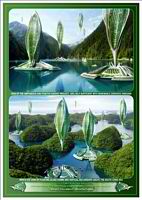
Hydrogenase an enzyme present in a family of micro seaweeds discovered to be an efficient catalyst for hydrogen generation via biochemical process.

"According to biologists, the output obtained by a farm with micro-seaweeds would be superior to those made currently with farming means to produce biodiesel or bioethanol. This could be estimated at 1000 litres of hydrogen for 330 grams of
chlorophyll per day whereas for example colza produces roughly
only 1000 litres of oil per hectare. According to industrials a
hectare of seaweeds could thus produce organically 120 times
more biofuels than a hectare of colza, soya or sunflower." from
the article, "HYDROGENASE, ALGAE FARM TO RECYCLE CO2 FOR
BIOHYDROGEN AIRSHIP"
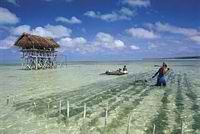
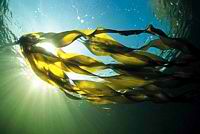
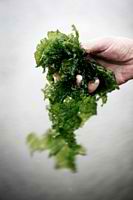
Micro Seaweeds: chlorela, spirulina, micro algae, kombu, hiziki,
arame, nori, wakame, hijiki, agar-agar.
 |
 |
"Moreover, a farm with seaweeds is a true miniature biochemical power station able to absorb CO2 as main nutrient by photosynthesis accelerated by producing hydrogen in vitro or in bioreactors. This natural process, nourishing itself with our waste enables thus to recycle under the effect of the sun, in seaweeds or sea water baths, up to 80% of carbonic gas and NOx (nitrogen oxides also very impacting on the greenhouse effect). The global organic cycle enables therefore to revaluate our carboned rejections such as for example those are coming from filters with particles of our cars, reactors of our airplanes or also our rockets coming from thermal power stations with coal or gas."
"Such as a growing tree uses the solar radiance to manufacture
organic material, we aim today at producing by photosynthesis
some dihydrogen (i.e. gaseous hydrogen) from living micro-organisms as seaweeds from the Chlamydomonas reinhardtii family that owns enzyme of hydrogenase type."
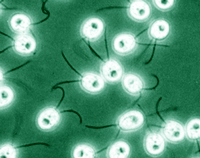
Based on such, Architect Vincent Callebaut designed this vertical hydrogen powered aircraft, and some Lilypad Cities, mimicking natures photosynthesis processes using hydrogenase enzyme to produce hydrogen as source of clean energy to power the vessels in a sustainable way.
|
Callebaut's Future Hydrogenase Aircraft Buiding Design 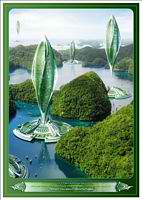 |
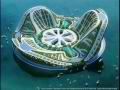 Callebaut Lilypad City Design |
Callebaut's clean and green futuristic design of his hydrogenase aircraft is envisioned to be an “observatory of the sea fauna and flora that fight for the protection of ecosystems and for the revitalization of the beds of corals and of endangered species. It is a true cleaner of seas and oceans by skimming and damaging as main nutrient the floating waste banks of our energy-consuming civilization.”
Return to Hydrogen Powered Aircraft to Making Hydrogen Home Page
Newsletter
What's your Favorite Way of Making Hydrogen?
At the end of the day, Making-Hydrogen.com is about how to create hydrogen from solar power to bacteria! What is the coolest way you have discovered in making hydrogen?