Hydrogen Element Introduced
Hydrogen Element. Introducing the chemical element that we are making or creating or more appropriately, extracting (into gas or liquid form) from where it is bonded with (as it is rarely alone on earth) in the quest for an eventual replacement of the fossil fuel that damaged our planet.
Name: Hydrogen
Symbol: H
Atomic Number: 1
Atomic Mass: 1.00794 amu
Number of Protons/Electrons: 1
Number of Neutrons: 0
Classification: Non-metal
Crystal Structure: Hexagonal
Density @ 293 K: 0.08988 g/cm3
Color: colorless
Melting Point: -259.14 °C (14.009985 K, -434.45203 °F)
Boiling Point: -252.87 °C (20.280005 K, -423.166 °F)
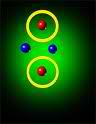

"Hydrogen has a single positive charge, like the alkali metals, but at room temperature, it is a gas that doesn't act like a metal. Therefore, hydrogen usually is labeled as a nonmetal." (From About-Chemistry)
Date Discovered: 1776
Discovered by: Henry Cavendish
Origin of Name: From the Greek word hudôr (water) and gennan (generate)
Uses:
*Filling balloons, metal refining or reducing metallic ores, cryogenics and in the study of superconductivity, fixation of nitrogen from the air in the Haber ammonia process, welding, hydrogenation of fats and oils, in large quantities in methanol production, hydrodealkylation, hydrocracking, and hydrodesulfurization, rocket fuel, producing hydrochloric acid, energy sources to power up car engines.
Sources:
"Hydrogen element is estimated to make up more than 90% of all the atoms of the mass of the universe. It is naturally found in the stars, and plays an important part in powering the universe through stellar hydrogen fusion processes that release massive amounts of energy by combining Hydrogen to form Helium - power of the Sun."
Process of extraction:
* Electrolysis - using electricity to split water into hydrogen and oxygen
* Fossil Fuel or Natural Gas Reforming for hydrogen production
Under further experimentation:
* Biophotolysis - Sunlight and bacteria combined and now formed into an Artificial Inorganic Leaf (AIL) mimicking photosynthesis
* With the use of metals as catalyst like Barium, Lithium, Aluminum, Titanium to split water into its base molecules
Let us continue experimenting making hydrogen for cleaner and healthier Earth.
Return to History of Hydrogen Page
Return from Hydrogen Element to Making Hydrogen Home Page
Newsletter
What's your Favorite Way of Making Hydrogen?
At the end of the day, Making-Hydrogen.com is about how to create hydrogen from solar power to bacteria! What is the coolest way you have discovered in making hydrogen?